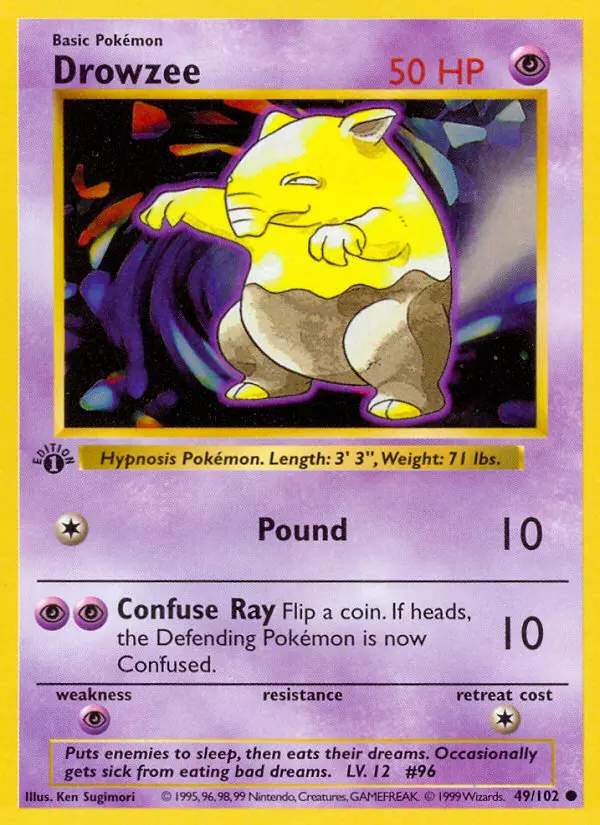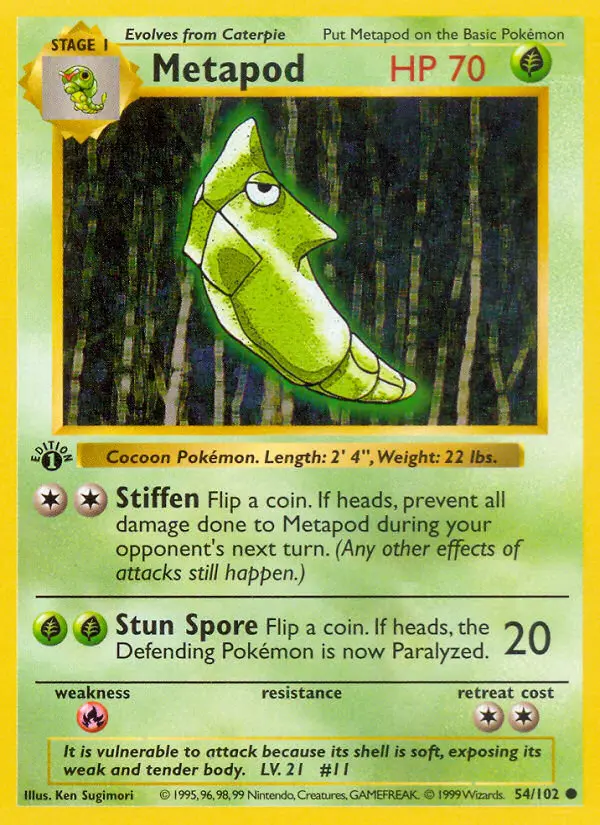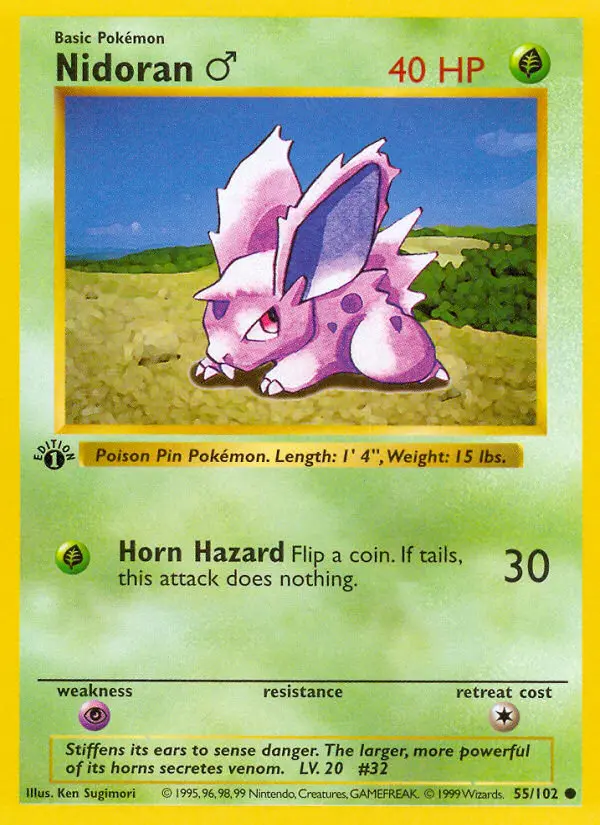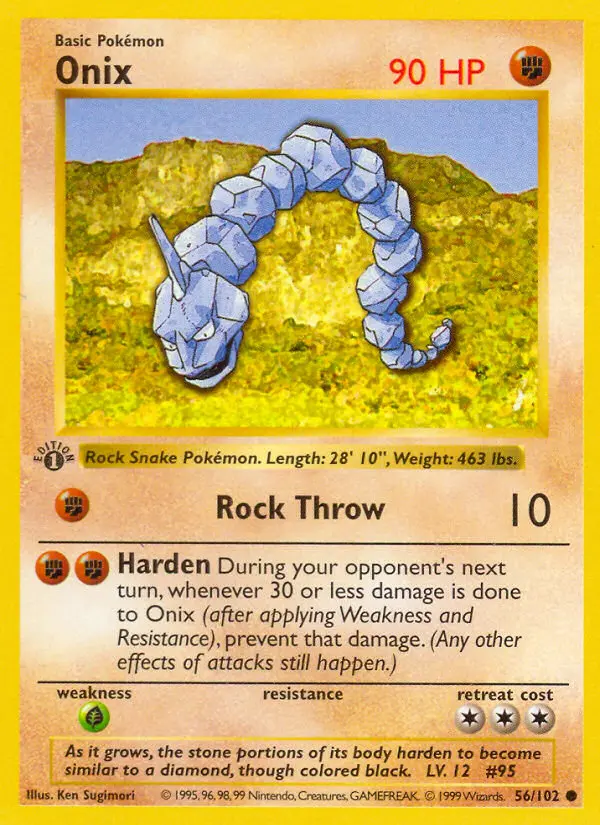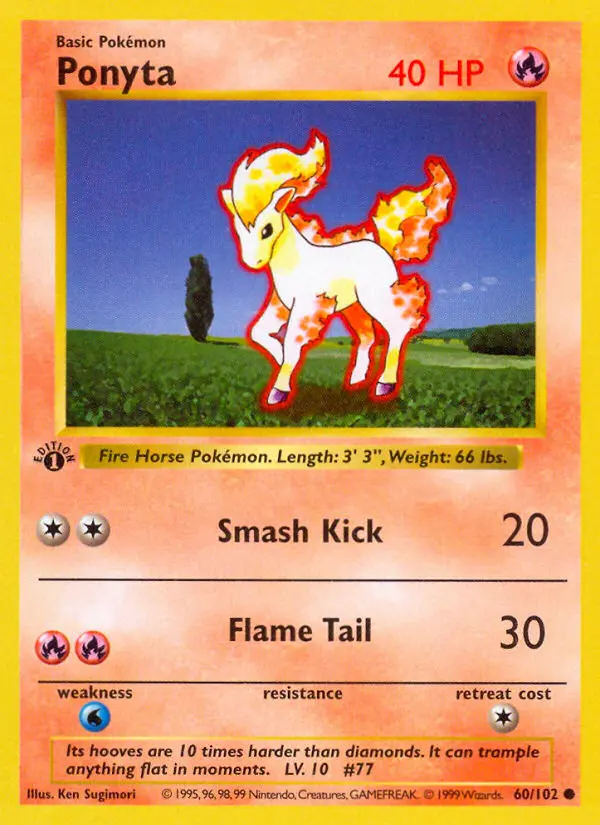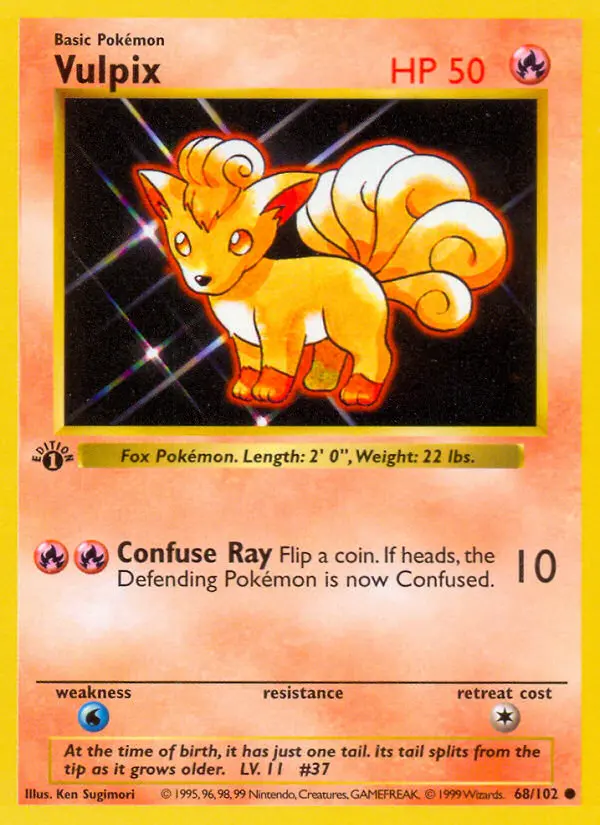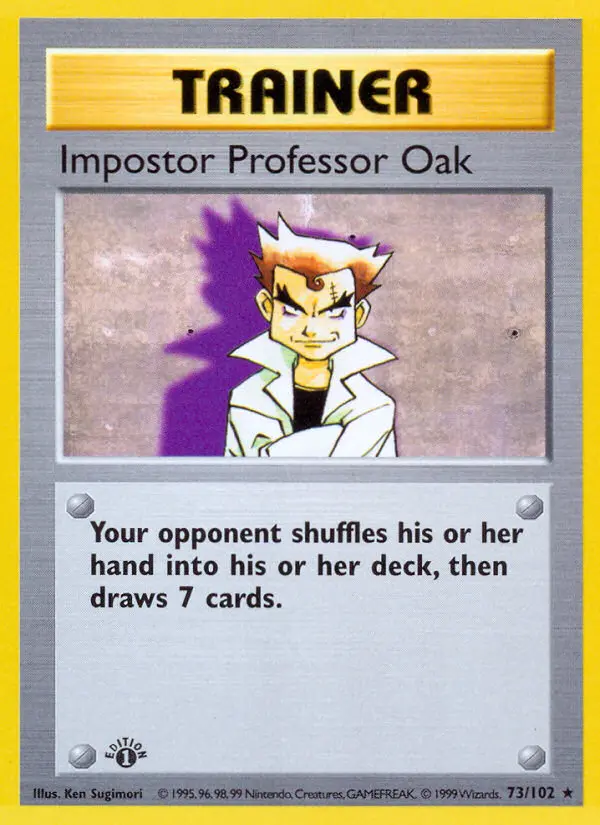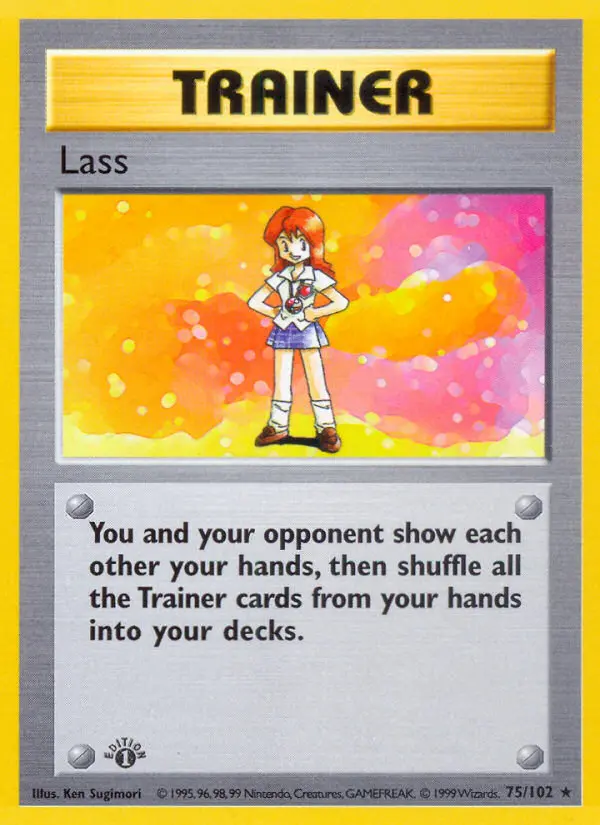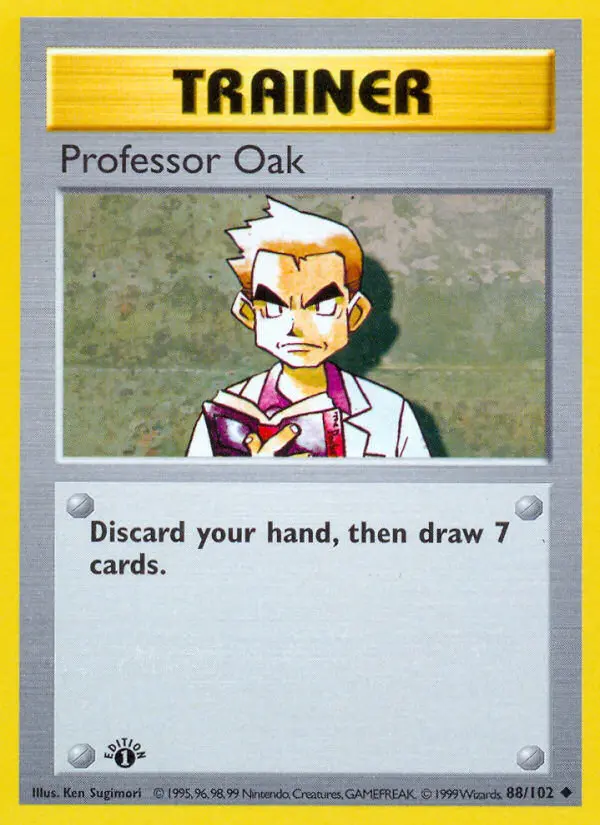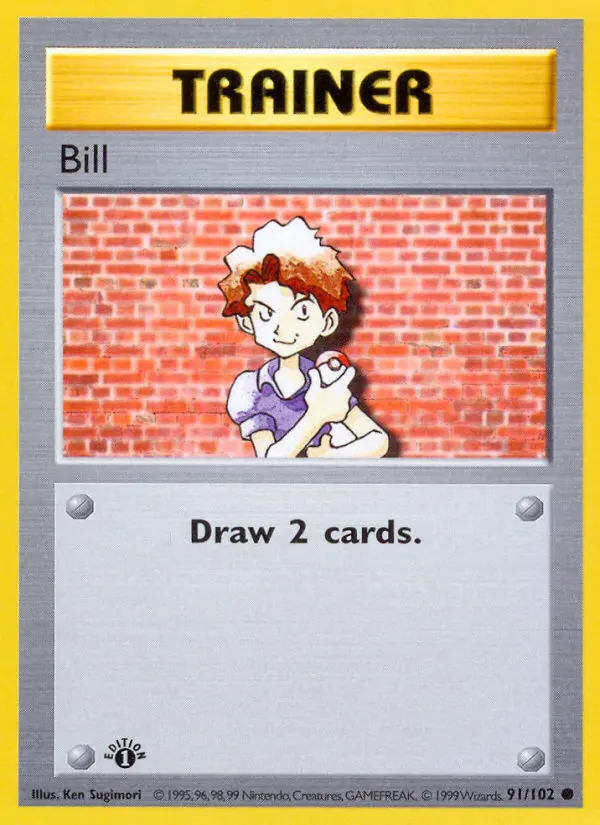

Ken Sugimori occupies a different place in Pokémon TCG history from most card illustrators. He is not only a frequent name in the illustrator line; he is one of the central visual architects of Pokémon itself. Born in 1966, Sugimori co-founded GAME FREAK and became closely associated with the original look of many Pokémon, characters and Trainers. In the TCG, his credit often represents official game artwork adapted for card use, rather than a new illustration made only for a single card.
The original Pokémon art director behind a vast TCG footprint
That distinction matters for collectors. Sugimori's cards are a bridge between the video games, official character design and the physical card game. His early credits appear throughout Base Set, including cards such as Alakazam, Blastoise, Mewtwo, Nidoking, Zapdos, Arcanine, Dratini and Professor Oak. Many of those images helped establish what Pokémon looked like to international players in 1999, especially for collectors who met the series through cards before they knew the games in detail.
Across PKMN Collectors, Sugimori is credited on more than 1,000 card records. The volume comes from many eras: early Wizards of the Coast sets, promotional cards, reprints, Professor cards, Pokédex-style character artwork and later anniversary products such as Evolutions and Classic Collection cards. His name appears on familiar Pokémon and Trainers including Pikachu, Mewtwo, Mew, Venusaur, Charizard, Professor Oak, Professor Elm, Professor Birch, Professor Juniper and Professor Kukui.
Stylistically, Sugimori's Pokémon art is built around clarity. The pose, outline and expression usually carry the image more than background detail. That approach is one reason his artwork has remained so reusable across guidebooks, packaging, game material and cards: it communicates identity quickly. For TCG collectors, this makes his cards especially useful when studying how official Pokémon designs became standardized and repeated across media.
Sugimori cards are not always chase cards in the modern rarity sense, and many are common or uncommon. Their value is often historical rather than purely scarcity-driven. A Base Set Blastoise, a classic Mewtwo promo or a Professor card with Sugimori artwork can tell a collector as much about Pokémon's visual foundation as a high-rarity modern card tells about current set design.
Because Sugimori's role is so broad, a good collection of his TCG work is less about one signature card and more about continuity. His credits trace Pokémon from its earliest international card releases through decades of reprints, celebrations and references back to the franchise's original art language.